
Over the past years I have been lucky enough to work on several radio programs and gained many a valuable lesson. There are many characters in this media area, good hard working people who care about their communities and wish to keep them in the groove so to speak.
We are I think addicted perhaps to radio. We realise this when we are away from it for a break and a gap happens that only broadcasting live can fix.
About twenty years ago perhaps more my wife and I got an invitation to a function at the Irish Consul Generals consulate in Sydney. It was on a Friday night and we met some old friends and made some new friends as well. The night was low keyed informative as well as friendly and entertaining and we felt like we belonged in the gathering.
As the night went on a man stood up at the front of the crowd and started singing Sean South From Garryowen a well known Irish Republician song. The voice sounded very familiar and I decided to introduce myself to the singer. Michael Smullen was his name and along with Vince Murray they did a radio show on Saturday morning hence the voice that sounded so familiar was his. Michael and I hit it off right away and he invited me to go into the studio the very next morning and have a look at the show and maybe read something. Well from this time on I was hooked to radio and eventually when Vince Murray decided to retire I took on the show and the name Ireland Calling continued.
During this time I met many people including entertainers who might happen to be touring at the time and wished to talk about his or hers career etc. Radio is an amazing media and more popular than ever despite all the new technology that forever invades our lives and space.
The immediacy of live radio is a hell of a buzz and whatever comment one makes is out there never to be retrieved. Over the years I have managed to show some people the ropes in radio and am pleased to see a few are still active working and doing a great job. Radio is indeed a demanding experience requiring will power, dedication and above all love what you do and you will do it well.
Over the past few years I have been lucky enough to work on several radio and gained many a valuable lesson. There are many characters in this media area good hard working people who care about their communities and wish to keep them in the groove so to speak. We are I think addicted perhaps to radio. We realise this when we are away from it for a break and a gap happens that only broadcasting live can fix.
Condensation is by far the most common cause of dampness in buildings, probably accounting for the majority of damp problems reported. It affects both old and new buildings, and can be a significant problem where the building has been modernised. Although it's the most common cause of damp it's not the only cause you may have rising damp.
Condensation is directly associated with mould growth which is associated with many health problems. It is this that the occupier sees first, and it gives an indication of the potential scale of the problem. The mould is usually found on decorative surfaces, especially wallpapers, where it can cause severe and permanent spoiling. In many cases, the mould and its spores ('seeds') give rise to complaints about health, and cause the "musty" odour frequently associated with a damp house.
The obvious places for condensation to occur are on cold walls and floors, but it can also occur in roof spaces and in sub-floor areas where there is a timber suspended floor; in the latter case, it can lead to rot developing in floor timbers.
The Cause
It is a fact that warm air can hold more water as vapour than cool air. Condensation is caused when moisture-laden air comes into contact with a cold surface - the air is cooled to the point where it can no longer hold its burden of water vapour. At this point, dewpoint, water begins to drop out of the air, and is seen as condensation on surfaces. On impervious surfaces such as glass and gloss paint, beads or a film of water collect. On permeable surfaces such as wallpaper and porous plaster, the condensing water is absorbed into the material. Therefore, the problem is not always initially obvious.
One should also be aware that the problem can occur well away from the site of most water vapour production. E.g. water vapour produced in the kitchen may diffuse through the house into a cold bedroom where it will condense on cold walls.
How do you treat it?
Improve Ventilation
This will sweep away the internal moisture-laden air and replace it with drier air from the outside (yes, external air is drier than internal air most of the year!)
Ventilation can be achieved by opening a few windows, installing air vents, and using extractor fans, however not all condensation problems originate inside the living areas of the house. Many houses suffer from poor or inadequate sub-floor ventilation due to either non-existent or insufficient ventilation of the sub-floor. Often owners are unaware of this until advised by a plumber, builder, pest control or damp expert that there is a potential problem. If they have not been fortunate enough to have been so advised, the problem is not known until serious damage is discovered.
Install sub-floor vents
The majority of problems can be eradicated by installing sub-floor vents such as those shown in the picture. Anti-Damp is the largest installer of large brass mesh vents in Sydney, this style provides 8 times the airflow of standard terracotta vents. We have had considerable experience in ventilating difficult sub-floors and have provided our services to builders, the Department of Housing, environmental pest companies and the general domestic market.
Barry can be contacted on mobile: 0412 229 955
Condensation and Dampness
Condensation is by far the most common cause of dampness in buildings, probably accounting for the majority of damp problems reported. It affects both old and new buildings, and can be a significant problem where the building has been modernised. Although it's the most common cause of damp it's not the only cause you may have rising damp.
Condensation is directly associated with mould growth which is associated with many health problems. It is this that the occupier sees first, and it gives an indication of the potential scale of the problem. The mould is usually found on decorative surfaces, especially wallpapers, where it can cause severe and permanent spoiling. In many cases, the mould and its spores ('seeds') give rise to complaints about health, and cause the "musty" odour frequently associated with a damp house.
The obvious places for condensation to occur are on cold walls and floors, but it can also occur in roof spaces and in sub-floor areas where there is a timber suspended floor; in the latter case, it can lead to rot developing in floor timbers.
Cracks in Walls and Ceilings
Over time, many building foundations sink due to the soil moisture or the terrain type that the building has been constructed on. The more serious causes are usually caused by improper construction and/or settling foundations, which requires the expertise of a structural engineer to evaluate the issue. Other causes for uneven floors include cracked floor joists, termite damage, and inadequate sub-floor supports. There also could be other environmental reasons, such as floods or heavy rainfall.
Common problems that you notice are sticking doors or windows, Cracks in brickwork or concrete. diagonal cracks in walls or unevan or sloping floors.
Rising Damp
This can indicate a problem with the original dampcourse.
Rising damp (or salt damp, as it is known in many parts of the world) is not the most common form of dampness encountered in buildings; this is left to condensation.
However a high proportion of older buildings are affected by rising damp to some degree or another. In general, walls prior to the 1970s did not have damp courses or inferior ones, which allowed the damp to rise in capillary action. In many cases of rising damp in more modern walls the causes are often traced back to bridging/ breaching of the D.P.C. (Damp Proof Course).
Termites (Also known as "White Ants")
To discourage termites and improve inspection access.
Always fix leaking water pipes and drains.
Always have regular inspections for termites.
Improve sub-floor ventilation, drainage and access.
Barry can be contacted on mobile: 0412 229 955
What is rising damp (or salt damp)
Rising damp (or salt damp, as it is known in many parts of the world) is not the most common form of dampness encountered in buildings; this is left to condensation. However a high proportion of older buildings are affected by rising damp to some degree or another. In general, walls prior to the 1970s did not have damp courses or inferior ones, which allowed the damp to rise in capillary action. In many cases of rising damp in more modern walls the causes are often traced back to bridging/ breaching of the D.P.C. (Damp Proof Course).
Rising damp in buildings may be defined as the vertical flow of water up through a permeable wall structure, the water being derived from ground water. The water rises through the pores (capillaries) in the masonry by a process loosely termed "capilliarity." In other words the masonry acts like a wick.
By natural evaporation from the surface of walls, rising damp seldom occurs above a height of 1.5 metres unless forced higher by being sandwiched between two impervious layers of render, gloss paint or wall paper. Temporary measures, like cleaning the surface, replastering or just repainting can actually make the situation even worse.
The rising damp also carries with it hydroscopic salts (nitrates and sulphates) and as dampness evaporates from the wall surface the salts are deposited in the plasterwork, which build up into a concentration, that can absorb moisture from the air making the situation critical.
Rising damp can be more serious than just causing aesthetic damage, structural damage to the base of the wall can also occur which if left unchecked could lead to dire consequences.
How do you treat it?
There are two methods of tackling salt damp or rising damp. The removal and replacement of old affected bricks and or stone with new ones with a new plastic damp course underneath, called 'Undersetting'. This method if done correctly will solve the problem, but is usually more costly, messy, time consuming and can compromise the structural integrity and the originality of the building. The other alternative is to place a chemical damp course at the lowest point of the wall, to create a barrier preventing any more rising saline water entering the wall above this point. We are one of the few companies in Australia who offer both physical and the chemical pressure injected damp proofing methods. We believe the chemical pressure injection method, which has been perfected over many years, is far superior to any other type of damp proofing solution but are happy to discuss both solutions with the customer.
Chemical Pressure Injected Damp Proof Method:
- Our fully qualified Anti-Damp specialists will carry out a full survey on your premises to diagnose the cause of the damp problem. If rising damp is the problem then.
- The extent of rising damp will be identified with electronic moisture meters.
- Wall coverings, render etc. will be removed to expose masonry or brick work only if required and normally only the affected area. Injection ports will be drilled along the identified damp course line then Tech-Dry Damp-Coursing Fluid which is odourless and safe to use will be pressure injected into the wall using specially designed pumps and lances to create a new damp proof course.
- All rubbish and waste material will be removed.
Physical Damp Proof Method:
- Our fully qualified Anti-Damp specialists will carry out a full survey on your premises to diagnose the cause of the damp problem. If Rising Damp is the problem then.
- The extent of rising damp will be identified with electronic moisture meters.
- Wall coverings, render etc. will be removed to expose masonry or brick work only if required and normally only the affected area. The mortar between two bricks or stones is cut out in sections (if any masonry is badly affected or damaged they will be replaced). A plastic membrane is inserted between the bricks and fresh mortar is applied. As this can only be done a few brick lengths at a time the wall is repaired in sections.
- All rubbish and waste material will be removed.
Contact Barry for an inspection - 0412 229 955
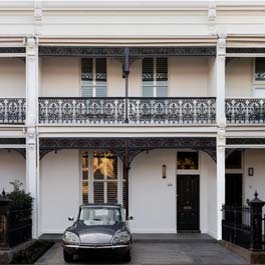 A specific verbal home inspection is for people who are thinking of buying a new property or own an existing property and require a verbal inspection by someone with 40 years experience in the building trade.
A home inspection assesses a building's integrity by examining foundations, walls, roofs, and floors for cracks, sagging, or movement. It identifies causes of damage (such as subsidence or water ingress) and provides repair recommendations to ensure safety and compliance.
We can point out the good and bad points of the building very quickly while you are inspecting and before you commit to buy.
With a verbal report you are accompanying Barry in his inspection, you can make notes and question any problem as it's found or pointed out.
Visit our Structural Problems page for more information about possible problems.
Your home is a long term investment and good practical down to earth advice is essential. This verbal report is great value for $400.
I work with a company called Anti Damp that can carry out any works required or you may decide to choose your own repairer.
Verbal Reports with client
Most reports tend to mention lots of minor problems and as many as possible to justify the very expensive cost, verbal reports can save you money.
With a verbal report you are accompanying Barry in his inspection, you can make notes and question any problem as it's found or pointed out.
If you decided to buy the property or choose to repair an existing property, I can also give quotations on any remedial work required.
Barry stands for value every time and this explains why he has been in the building industry for over 40 years.
Barry can be contacted on mobile: 0412 229 955